Welcome to Visit Journal of Film Studies
Toggle navigation
Home
About Journal
Editorial Board
Journal Online
Just Accepted
Current Issue
Archive
Most Read
Most Download
Most Cited
Instruction
Subscription
Contacts Us
中文
Founding of Journal of Film Studio
A new international Open access journal was found in Shanghai University on Aug 6, 2019
Author Center
Peer Review
Editor-in-Chief
Office Work
Project Articles
More>>
Video Gallery
More>>
Announcement
More>>
11
2020-04
The 1th editorial board was established
Current Issue
Archive
Most Read
Most Download
Most Cited
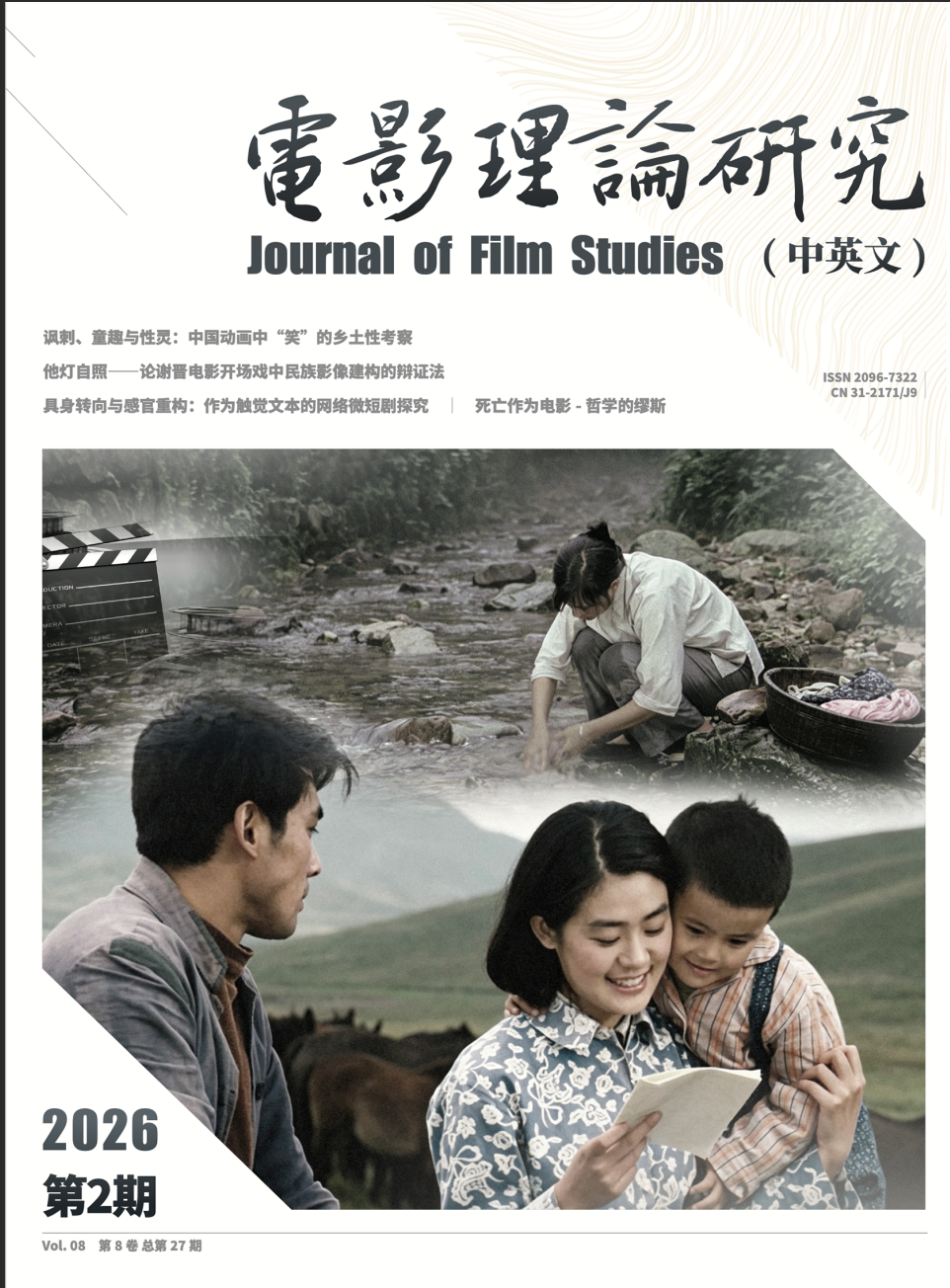
10 June 2026, Volume 8 Issue 27
#br#
2026, 8(27): 5-17.
Asbtract
(
95
)
Related Articles
|
Metrics
The cinematic artistry of Xie Jin is established from the opening scenes, where a distinct mode of national imagemaking is set in motion through a dialectical visual rhetoric. Drawing on a comparative analysis of opening sequences from his representative works across different periods, this article argues that Xie Jin employs a‘ roaming gaze’—a mobile visual strategy informed by Chinese aesthetic traditions—to shape ensemble figures and organize cinematic space . This method gives rise to a form of psychological spacetime rooted in an affect-centered philosophical orientation often associated with Confucian thought. Through this practice, Xie Jin’s narrative form achieves an immanent transcendence of the classical Hollywood model while remaining distinct from the stylistic tendencies of his contemporaries in Chinese cinema. Positioned at the intersection of national and global cinematic traditions, his fflms articulate a reffexive mode of visual representation that is both self-grounding and outward-looking. This study seeks to illuminate the artistic strategies and cultural logic through which national imagery is constructed in the opening scenes of his fflms.
Video Gallery
More>>
Announcement
More>>
11
2020-04
The 1th editorial board was established
Links
More>>